
Twinning Protocol Signed Between Focșani and Bălți from the Republic of Moldova on the 159th Anniversary of National College “Unirea”
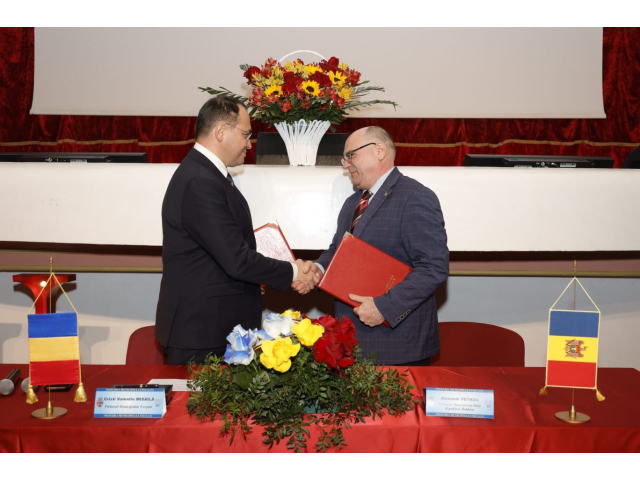
On Thursday, January 23, 2025, Mayor Cristi Valentin Misăilă and Mayor Alexandr Petkov signed the twinning protocol between Municipiul Focșani and Municipiul Bălți from the Republic of Moldova.
The official moment took place at Colegiului Național “Unirea” in Focșani, during the celebrations marking the 159th anniversary of the first classes held at this educational institution. The festivities were held in the “Mihai Eminescu” hall, with teachers and students of the college attending this dual event. All attendees witnessed a new beginning for Focșani and Bălți, as the two mayors reaffirmed their desire to initiate and implement as many beneficial projects as possible for both communities.
The ceremony was also attended by Vice Mayor Ghenadie Șmulschii and Mayor’s Advisor from Bălți, Eduard Pleșca, Vice Mayors of Municipiul Focșani, Traian Negulescu and Adrian Vulpoiu, local councilors, as well as representatives from the Vrancea County Council, the Prefect Institution of Vrancea, the Vrancea County School Inspectorate, and the Vrancea Museum.
Mayor Misăilă signed the twinning agreement with City Ștefan Vodă from Moldova
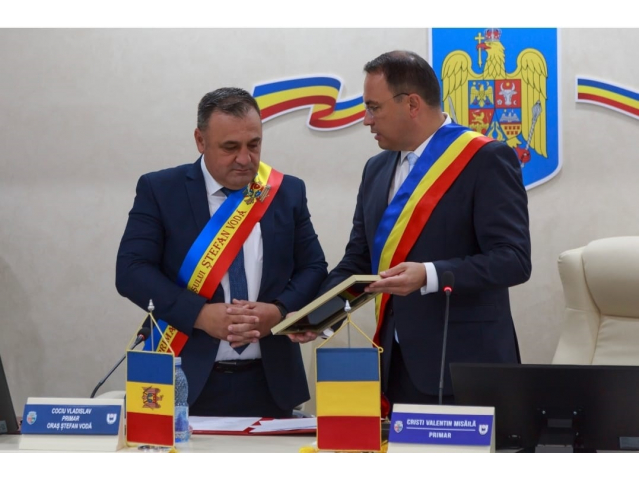
On Wednesday, 6 July 2022, at the Municipality of Focșani, the twinning agreement with City Ștefan Vodă from the Republic of Moldova was signed.
In a festive atmosphere occasioned by the 160th anniversary of the administrative union of Focșanii Moldoveni with Focșanii Munteni, Mayor Cristi Valentin Misăilă and Mayor Vladislav Mihail Cociu finalized the twinning agreement between the two cities.
Dozens of officials and representatives of local administration attended this historic moment – the two vice presidents of Vrancea County Council, Marian Oprișan and Ionel Cel-Mare, MP Elena Stoica, Deputy Secretary of State Cristina Nedelcu, Subprefect Claudia Serafimciuc, Father Protopop Oscar Frunză, Constantin Mîndrilă, manager of the “Sf. Pantelimon” Focșani County Emergency Hospital, Chief Inspector IPJ Vrancea Remus Nica, Chief Inspector ISU Vrancea Flaviu Chiscop, Chief Inspector IJJ Vrancea Dorel Iordache, mayors, local and county councilors. Online via Zoom, Professor Octavian Țâcu, former Member of Parliament of Moldova and former Minister of Youth and Sports in the Government of Moldova, was also present.
Writer Adrian Matei read a poem with strong themes of unity with our brothers across the Prut River, which created an indescribable emotion for the entire audience.
Below is the message of Mayor Cristi Valentin Misăilă delivered on this occasion:
*”Please allow me to warmly welcome our guests and “brothers” from the Republic of Moldova, Mayor Vladislav Mihail Cociu, Vice Mayor Olga Luchian, and Vice Mayor Veaceslav Iurco.
The 160th anniversary of the administrative union of Focșanii Munteni with Focșanii Moldoveni is a special moment for us, the people of Focșani. Just three years after the Union of the Romanian Principalities, Focșani became a single locality.
This is why, alongside cultural and artistic events dedicated to this anniversary, we chose 6 July for a truly historic action – twinning with City Ștefan Vodă from the Republic of Moldova.
Just as in 1862 the decree signed by Ruler Alexandru Ioan Cuza united, once and for all, the two localities named Focșani, today we sign the twinning of our localities, Focșani and Ștefan Vodă.
However, for today’s moment to be possible, we began our steps on another important day, 24 January 2021, when we had the first discussions in Focșani, the city of the Union, with Deputy Octavian Țâcu, a true Romanian from across the Prut!
Later, on 12 April 2021, we had an online meeting with Vladislav Mihail Cociu and Olga Luchian, the Mayor and Vice Mayor of City Ștefan Vodă from the Republic of Moldova.
During the discussions, various topics were addressed, from culture to education, and the conclusion reached by both sides was that there are common points bringing the two cities closer together.
From here, we initiated the legal procedures for twinning and requested the necessary approvals from the responsible ministries and subsequently the agreement of Focșani Local Council, in view of the Twinning!
Meanwhile, we received another wonderful piece of news that will certainly influence our cooperation! The Republic of Moldova received the status of a candidate country for EU accession.
Ștefan Vodă is a city with a diverse cultural life, hosting the “Maria Bieșu” School of Arts, the House of Culture, the City Public Library, a museum, a theoretical high school, a gymnasium school, a primary school, and two kindergartens.
The twinning signed today provides us with a privileged framework for future exchanges and international cooperation, as well as the opportunity to combine friendship ties with various types of exchanges across very diverse fields.
In this regard, we consider that transnational projects can be launched to contribute to improving the lives of citizens in both localities.
We will mainly follow several directions of cooperation, included in the Twinning Agreement – community development based on information and communication technology, education, culture and sports, health, social sector, tourism, environmental protection, economic cooperation.
And the list remains open!
With the signing of the Agreement, we take into account all possible categories of collaboration, because we have much to learn from each other, and together, on the basis of this cooperation, we will develop projects beneficial to both communities.
Focșani – Majdanpek, Twinned Cities
Majdanpek is a locality in the Bor district, Timok region, eastern Serbia, with a population of over 10,000, located 78 kilometers from Turnu Severin and 189 kilometers from Craiova. The city is known for its copper and gold mines, as well as its cultural and historical heritage, being one of the most important in Europe.
The relationship between Focșani and Majdanpek, Republic of Serbia, began in July 2015 following a letter of intent from the Majdanpek City Hall, expressing the desire to establish a twinning agreement between the cities of Focșani and Majdanpek. Following this initiative, correspondence was carried out with the local administration in Majdanpek, Republic of Serbia, establishing contacts to initiate the twinning procedures. Subsequently, reciprocal visits were organized by representative delegations of the two local administrations.
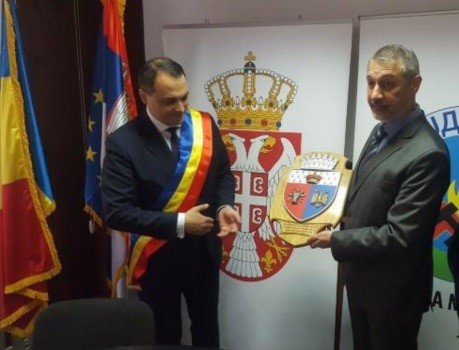
Therefore, between April 28 and May 2, 2017, a representative delegation from the municipality of Focșani, led by the Mayor of Focșani, Cristi Valentin Misăilă, and composed of Vice Mayor Marius Iorga, the municipal secretary Eduard Corhană, and local councilors Bogdan Matișan, Mihai Nedelcu, Mihai Petruț, and Radu Nițu, honored the invitation of the Mayor of Majdanpek, Dejan Vagner, to participate in the Serbian locality’s traditional celebration, the Lilac Days. On this occasion, the official Twinning Agreement was signed, and discussions were held regarding potential future collaboration projects.
“The Parties express their joint will to establish a relationship of fraternity between them, aiming to develop and maintain permanent bonds of friendship and cooperation, for the benefit of both parties, and in this regard, decide to declare the municipality of Focșani, Romania, and the city of Majdanpek, Republic of Serbia, as twinned localities. The two parties will facilitate connections between the economic sectors of the two cities through the development of mutually advantageous economic cooperation,” the twinning agreement states.
During the meeting, it was emphasized that the Serbian municipality wishes to consolidate and expand its ties with our municipality to enable exchanges of experience in economic, cultural, sports, and artistic fields, as well as to maintain and develop permanent bonds of friendship and cooperation for the benefit of both parties. Furthermore, exchanges between local institutions and non-governmental organizations will be encouraged, reciprocal visits between the residents of the two cities will take place, and the creation of friendship associations at the level of the two local communities will be promoted.
Focșani – Tivoli, Twinned Cities
The relationship between Focșani and Tivoli, Italy, began in 2007, following the efforts of an Association of Romanians living in Tivoli. In fact, the foundation of this relationship was precisely the over 6,000 people from Focșani or Vrancea who live and work in Tivoli. Based on this reality, in 2008 Romania’s National Day was celebrated in Tivoli, with local officials and the “Țara Vrancei” Folkloric Ensemble participating.
Although relations stagnated for a period, influenced by various local or international events, this year Tivoli strongly resumed the twinning process between our cities, and we responded with the same enthusiasm.
Thus, between October 6 and 10, 2011, a representative delegation from Focșani visited Tivoli for an extraordinary event organized by our hosts. The delegation was led by Mayor Decebal Bacinschi and included Vice Mayor Vasile Dobre and local councilors Liviu Oloeriu, Radu Nițu, and Nicolae Tănase.
On this occasion, the Tivoli Municipality organized a triple-significance event: a pre-twinning protocol with the Municipality of Focșani was signed, the twinning agreement between Tivoli and Delphi, Greece was signed, and the 10th anniversary of the twinning between Tivoli and Saint Amand Les Eaux, France, was celebrated.
Importantly, and noted by all participants, these relations demonstrated the mathematical principle of transitivity, and our hosts were very pleased to see that the friendship network now included four members. This was evident even from the official speeches of the representatives of the municipalities present. On this occasion, the Protocol for the Twinning of the Municipality of Focșani and the City of Tivoli was signed, and the subsequent steps for completing this future agreement were defined.
In December 2011, the Focșani Local Council approved Decision no. 349 regarding the approval of the twinning agreement between the Municipality of Focșani, Vrancea County, Romania, and the city of Tivoli, Italian Republic.
Responding to the invitation extended by Mayor Decebal Bacinschi, on behalf of the Municipality of Focșani, between January 23–26, 2012, a representative delegation from Tivoli, led by the Mayor of the city, Sandro Gallotti, visited Focșani. Additionally, representatives from the city of Saint Amand Les Eaux, France, were also present as guests.
The signing of the Twinning Agreement between Focșani, Romania, and Tivoli, Italian Republic, took place on February 25, 2012, in the “Florentin Delmar” Hall of the Ateneul Popular “Mr. Gh. Pastia” Focșani. In the speeches delivered by the two mayors, the joy of accomplishing a long-postponed act due to objective circumstances and the shared desire to identify new opportunities for cooperation was clearly evident.
Alongside them, the representatives of Saint Amand Les Eaux, France, expressed their delight at the initiative and noted that they felt close to both their friends from Tivoli, with whom they have been twinned for 10 years, as well as the new friends from Focșani, whom they first met in Tivoli. The French guests extended an invitation for participation in 2013 in a “Week of Fraternity,” which will include all twinned cities and cities connected to them.
Majdanpek City Days, Republic of Serbia, September 12–17, 2017
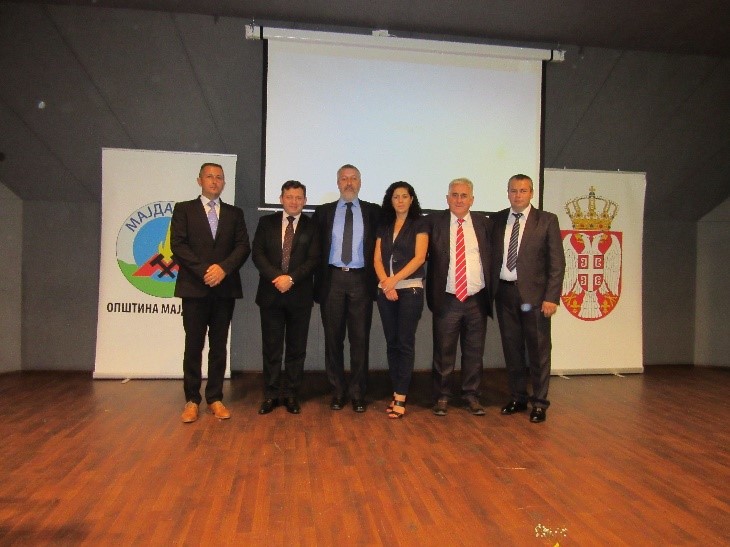
Between September 12 and 17, 2017, a representative delegation from Focșani visited Majdanpek once again for the extraordinary event “Majdanpek City Days,” Republic of Serbia. The delegation was warmly welcomed by representatives of the Majdanpek Municipality, especially considering the long-standing relationship between the two cities.
During the “Majdanpek City Days” celebration, Majdanpek City Hall representatives accompanied the delegations to various significant city landmarks, highlighting similarities between the Serbian and Romanian peoples.
The Focșani City Hall delegation attended the opening ceremony of “Majdanpek City Days,” where discussions covered the city’s history, traditional customs, and the economic potential developed by the community. During the event, Mr. Nicu Michulec, representing the Focșani City Hall delegation, conveyed the message of Mayor Cristi Valentin Misăilă. Majdanpek City Hall was represented by Mayor Dejan Vagner and Local Council President Slavisa Bozinovic, who publicly expressed respect for Focșani citizens and their delight in the twinning of Majdanpek and Focșani. The Romanian Consul in Serbia, Marius Olyver Diloff, was also present, congratulating the twinning initiative and promoting Romanian traditions and Vrancea wine regions in Serbia.
Visit of the Majdanpek delegation to Focșani during the 2017 Bachus International Wine Festival
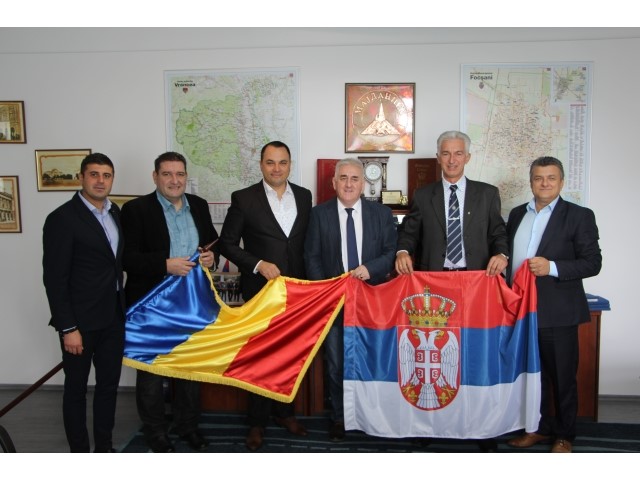
Following the early September invitation from the Serbian local administration to attend Majdanpek City Days, discussions continued on potential collaborative projects between the two cities, primarily in culture and sports. Representatives of both cities welcomed the ideas for future cooperation, reaffirming their willingness and enthusiasm for joint activities.
Visit of His Excellency Paul Brummell – Ambassador of the United Kingdom of Great Britain and Northern Ireland to Romania, September 8, 2017
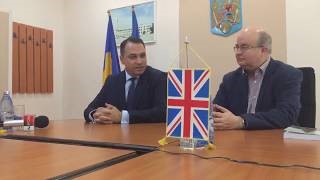
At the invitation of Focșani City Hall and Bernard Cheere, organizer of the Focșani Blues Festival, His Excellency Ambassador Paul Brummell visited Focșani for the second time since starting his diplomatic service in Romania. On September 8, Mayor Cristi Valentin Misăilă welcomed him at City Hall. Discussions focused on the potential twinning of Focșani with a UK city to exchange experiences in culture, education, sports, and economics. Ambassador Brummell assured that he would take steps to identify a region for partnership, noting that many Focșani residents live in the UK, which could benefit both parties. He emphasized British interest in investing in Romania, highlighting advantages in labor force, IT industry, and geographical location. The Ambassador also attended the opening of the Blues Festival, and the visit proved fruitful for potential social, cultural, and economic collaboration between Focșani and a UK city.
Cooperation Focșani – Alytus, Lithuania

Following sporadic contacts, in November 2016 a Focșani delegation visited Alytus, Lithuania, invited by the local administration and supported by the Romanian Ambassador to Lithuania and Latvia, Mr. Dan Adrian Bărbulescu. Discussions included mutual acquaintance and possible collaborations between the cities. Alytus reciprocated during the Union of Principalities Day, sending a delegation of local councilors to Focșani on January 24, 2017.
Alytus City Days, Lithuania, June 15–18, 2017
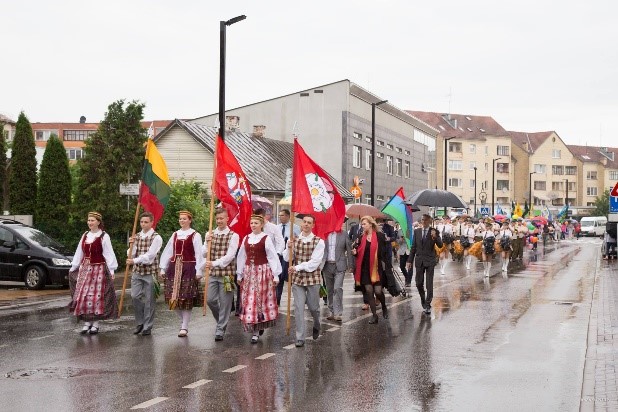
Between June 15–18, 2017, Focșani participated in Alytus City Days with a delegation led by Deputy Mayor Ionuț Mersoiu, alongside local councilors Dobre Alin Claudiu and Necoară Irina. The delegation was warmly welcomed by Alytus officials. The visit began with a trip to Trakai Island Castle, the residence of Tsar Alexander I, unique as an island castle in Eastern Europe.
On the second day, the delegation visited Snaige Company, established in 1963, producing refrigerators since 1966, exporting 97% of its production, with a capacity of 550,000 units and 650 employees, awarded multiple gold medals for “Product of the Year” in Lithuania. The delegation also visited Alytus St. Benedict Gymnasium, offering education to students aged 7–19, emphasizing moral and civic education.
On June 16, Alytus celebrated its City Days with a parade, art exhibitions, craft markets, and concerts. The delegation attended official events including the raising of the city flag, announcement of cultural award winners, and the conferment of honorary citizenship. The visit strengthened cultural and educational exchanges, establishing steps toward future twinning between Focșani and Alytus.
Tivoli, Italy – Peoples’ Festival – 2017
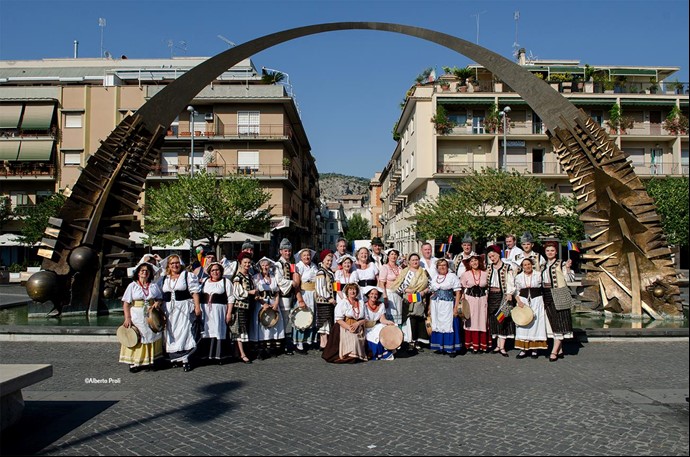
Focșani is twinned with Tivoli, Italy, since 2012. Cultural projects include performances by the “Țara Vrancei” Folkloric Ensemble in Tivoli. In 2013, Saint-Amand-les-Eaux, France, organized “Week of Fraternity,” inviting Focșani and other twin cities. In 2014, the event took place in Andernach, Germany, and in 2015 in Focșani. In 2017, Tivoli hosted the “Peoples’ Festival,” attended by twin cities: Yugawara (Japan), Delphi (Greece), Focșani (Romania), and Saint-Amand-les-Eaux (France). Focșani’s delegation included officials, a smaller group of the “Țara Vrancei” ensemble, and a chef conducting workshops for culinary students. Meetings with Tivoli’s mayor Giuseppe Proietti discussed cooperation progress and opportunities.
EUROPEAN WEEK OF FRATERNITY 2015
3rd Edition
The Week of Fraternity was first organized in 2013 by friends from Saint-Amand-les-Eaux, France, while the second edition took place in 2014 in Andernach, Germany. In 2015, Focșani hosted the “European Week of Fraternity“, bringing together representatives from cities with friendship relations and their twin cities. From May 7–10, delegations visited Focșani from:
– Saint-Amand-les-Eaux, France: Ms. Corinne Moisan – local councilor, Mr. Gil Gambiez – local councilor, Mr. Léon Desmenez – communications expert;
– Andernach, Germany: Mr. Claus Peitz – mayor, Ms. Roswitha Peitz, Mr. Christoph Maurer – spokesperson;
– ‘s-Hertogenbosch, Netherlands: Mr. Herman Loerakker – communications expert;
– Orhei, Republic of Moldova: Mr. Vitalie Colun – mayor, Mr. Iurie Garștea – local police director.
On the first day, guests participated in discussions to identify potential areas of collaboration with Mayor Decebal Bacinschi, Deputy Mayor Marius Iorga, local councilors, and media representatives during the “European Municipal Cooperation” Conference at the “Maior Gh. Pastia” Popular Athenaeum. The conference concluded with the opening of the photo-documentary exhibition “Our Cities in Pictures”, giving each delegation the opportunity to present their city, followed by a mini-chamber recital by artists from the “Unirea” Chamber Orchestra.
The afternoon included presentations of successful EU-funded projects, including a visit to the recently renovated “Ștefan cel Mare” School (completed in 2014) and SC ENET SA, which completed one of the most ambitious urban heating rehabilitation projects in Focșani. The day ended with the musical-choreographic show “Like on a Holiday” performed by the “Țara Vrancei” Professional Folkloric Ensemble and a traditional art exhibition at the Ensemble’s headquarters.
On May 9, the delegations celebrated Independence Day and Europe Day, laying wreaths at the Monument of Independence and attending a short fanfare concert with the honor guard parade. They also visited Schumann Park for mini-concerts by the “Pastorala” Traditional Choir and the “Țara Vrancei” Folkloric Ensemble. In the afternoon, foreign delegates visited the History Museum, Unirea National College (recently renovated with EU funds) and the “Maior Gh. Pastia” Municipal Theater, where the theater building, rotunda, and performance hall were presented.
Participants in the 2015 European Week of Fraternity were impressed by their experiences in Vrancea, expressing their desire to return to Focșani for future celebrations of special significance.
Week of Fraternity, Saint-Amand-les-Eaux, France, May 1–5, 2013
From May 1–5, 2013, Focșani participated in the “Week of Fraternity” in Saint-Amand-les-Eaux, France, with an official delegation accompanied by members of the “Țara Vrancei” Professional Folkloric Ensemble. The delegation was warmly welcomed by Saint-Amand-les-Eaux representatives, and the hospitality was maintained throughout the visit. Representatives from six European cities participated: Saint-Amand-les-Eaux (France), Andernach (Germany), Focșani (Romania), Tivoli (Italy), Farnham (UK), and Ekeren (Belgium). The event, initiated by Mayor Alain Bocquet of Saint-Amand-les-Eaux, aimed to invite twin cities and their partners under the motto: “Friends of my friends are my friends!” The activities fostered mutual understanding, the discovery of common interests, and future collaboration opportunities.
Key activities included:
- May 3 – Saint-Amand-les-Eaux City Hall: Opening of the photo-documentary exhibition with contributions from participating cities; Focșani exhibits were highly appreciated.
- May 3 – Monument of Heroes: Laying of wreaths from all participating cities in memory of war heroes.
- May 3 – Saint-Amand-les-Eaux Theater: Public debate on “The Importance and Future of Twinning Relations in a United Europe” with representatives from all six cities. Discussions included local cooperation, education, youth, and culture. The audience actively participated with questions and interventions.
- May 4 – City Council Hall: Seminar on local cooperation and development of the “Week of Fraternity” initiative, attended by all delegations, local authorities, media, and NGOs. Emphasis was placed on citizen participation in joint projects as a foundation for a united Europe.
- May 4 – Saint-Amand-les-Eaux Theater: Gala performance by the symphonic orchestras “Armonie de Saint Amand” and “Armonie d’Andernach” and the “Țara Vrancei” Ensemble. The artistic performances were warmly received.
Additional activities included bilateral meetings between city representatives and citizens, as well as performances by the “Țara Vrancei” Ensemble in residential centers and schools, receiving high acclaim. Delegates also visited the city’s Technical Department, learning about the organization of urban services, green spaces, street maintenance, and logistics for events. The proposal for annual rotating meetings and expanded cooperation, potentially evolving into twinning agreements, was agreed upon by all participants, creating a strong network of European cities and opportunities for Focșani.
Solidarity Relationship ‘s-Hertogenbosch – Focșani
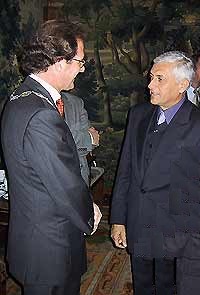
There is a solidarity relationship between the Municipality of Focșani and ‘s-Hertogenbosch, Netherlands, formalized through an Agreement signed in 1998. This agreement establishes the framework of the cooperation program in the fields of: Health, Education, Sanitation, Water Supply, and Local Public Administration.
Since September 2000, the ‘s-Hertogenbosch – Focșani Foundation has been coordinating collaborative projects from the Dutch side between organizations in ‘s-Hertogenbosch and Focșani.
The Foundation is funded by the ‘s-Hertogenbosch City Hall. Its purpose is to stimulate, coordinate, and support activities and projects within the solidarity relationship. At the same time, it promotes mutual understanding and engagement between the inhabitants of the two municipalities through information campaigns and exchange programs. The projects primarily aim to transfer knowledge and expertise from one organization to another.
In the field of local public administration, a new approach was proposed regarding the relationship between local authorities and citizens. Projects were implemented dividing the city into six zones, each assigned 3–4 local councilors. These councilors, together with dialogue groups made up of citizens, economic agents, and institutions in the area, identified priority community issues and proposed common solutions. Direct contact with citizens and their involvement in decision-making was extended. Currently, the participatory local budget process is underway. The public hearing on the local budget represents the culmination of a process of collecting citizen proposals and debating budget options in each zone.
To further improve the administration–citizen relationship, with the support of Dutch partners, a project was implemented resulting in the creation of the Focșani City Hall Communication Center. The results are evident. The center has become a reference point, fully functional from the first day. A pleasant working environment, where citizens are treated as equal partners without the traditional “counter” barrier, a computerized record system, efficiency, functional operation, and trained personnel with communication skills are just some of the characteristics defined for this new approach. Whether we succeeded or not, we leave that to you to decide.
Currently, two major projects are underway: one concerns the renovation of a park in Focșani, jointly by schools from Focșani (Agricultural School Group) and ‘s-Hertogenbosch (Groen School), with support from the local administration.
The current “Vlahuță” Park will be completely refurbished in spring 2004, and the other involves the joint construction, with a Dutch construction company, of an apartment block intended for social housing. This project will also be completed in summer 2004.
“Curriculum Greening Europe” – This project is funded through the “Leonardo da Vinci” Program and aims to harmonize the school curriculum by introducing environmental education in vocational training. It is an important project with partners from the Netherlands, the United Kingdom, Finland, Spain, Greece, and Germany. Romania is the only Eastern European country represented through the Construction and Assembly Vocational School in Focșani. The experience gained over almost three years of cooperation with these international partners represents one of the main outcomes of the project. The final project meeting took place in Focșani from November 5–8, 2003. This demonstrates not only the appreciation of our work but also the genuine interest of foreign partners in understanding local realities in Romania.
“Wind Energy Potential I” – This project was implemented between 1999–2002 and funded by the European Union under the Ecos-Ouverture Program. Alongside partners from Spain, Italy, Slovenia, and Slovakia, Focșani represented Romania in an ambitious project expanding the use of renewable energy. The study carried out may have seemed minor to some, but it remains the only such study conducted in the country.
Project implementation steps:
– Evaluation of the wind energy potential of each participating region
– Analysis of restrictions regarding wind energy exploitation in each region
– Development of a Wind Plan for each region
– Planning public communication and dissemination of the Project in each participating region
Project Results
The WEP I Project (1999–2002) implemented by the five European regions achieved the following results:
1. Each participating region now has a Wind Plan defining:
– Geographical areas suitable for electricity production
– Installed energy potential and electricity transport/distribution requirements
– Wind farm construction programs, environmental impacts, and restoration plans
– Implementation costs and procedures to be followed until execution
2. The work within WEP I facilitated cooperation and knowledge exchange for at least 10 experts from each region in the areas described above.
3. All participating entities gained direct experience through visits to wind farms in Navarra, Spain, a leading region in Europe for wind energy development.
4. Participants’ involvement and experience in this process will facilitate future project implementation.
Called in many writings “The City on the Milcov,” the river on which Voivode Ștefan cel Mare established the border between Moldavia and Wallachia in 1482, the locality entered people’s consciousness as “the City of the Union.”
The toponymy of Focșani comes from the Focșa family, “good and righteous Moldavians from the time of Ștefan cel Mare.”
Although documented from the 16th century (January 30, 1575, when Alexandru Vodă from Wallachia noted in a document that he had been “deceived at Focșani by Ioan Vodă”), the settlement on the Milcov is much older.
Archaeological excavations carried out in 1977 in southern Focșani attest that the current site of the city has been inhabited since the Neolithic, with discovered objects belonging to the Cris culture (c. 5000 BC). A Dacian treasure from the 3rd–2nd century BC, a treasure of Roman imperial coins, and other material culture evidence belonging to the Carpi and Sarmatians from the 2nd–3rd century AD were also found.
Until the early 17th century, Focșani was recorded as a village, and after 1615–1620 it is mentioned as a market town, gradually becoming the most important settlement between Trotuș and Râmnicul Sărat, located at the crossroads connecting Wallachia with countries in Western and Eastern Europe.
An important moment in Focșani’s history was the 1859 Union, with the city forever linking its name to this national act. Between 1859 and 1862, Focșani hosted the Central Commission responsible for drafting the common laws of the two Principalities, the Court of Cassation for the two Prefectures (Putna and Râmnicul Sărat), two tribunals, two police stations, and two municipal sections.
In 1862, the union of the two parts of the city was realized by the unification decree of July 6, 1862, signed by Alexandru Ioan Cuza, making Focșani the county seat of Putna.
The period between the Union and the attainment of independence saw significant growth. In 1866, the Gymnasium (today Colegiul Național Unirea) was built, in 1867 the County and Municipal Hospital, and in 1873 the Public Garden.
The late 19th and early 20th centuries continued this flourishing development, leading to the establishment of the Philharmonic Society symbolically named “Doina Vrancei” (1907), the Public Library (1912), the “Mr. Gh. Pastia” Theater inaugurated in 1913, and the Palace of Justice.
On September 8, 1917, the armistice between the Romanian Army and the Central Powers was signed in Focșani.
Between the two World Wars, Focșani continued to develop with the construction of a power plant, the People’s Athenaeum, the National Bank building, and the Telephone Palace; the water supply and street network were improved, and the Mausoleum of Heroes was built between 1924–1926, along with the Monument of the Heroes of the 10th Dorobanți Regiment (1930).
After 1950, a rapid process of industrialization took place, directly affecting economic growth, urban migration, and the city’s urban structure:
- First apartment blocks appeared (Gara, Sud, Bahne neighborhoods, city center).
- The industrial zone gradually developed.
- Factories and enterprises were constructed: Clothing Factory (today S.C. INCOM S.A.), Wood Processing Plant (S.C. MOPAF S.A.), Tool and Hydraulic Components Enterprise (S.C. ROMSEH S.A.), Electrical Equipment Enterprise (S.C. INSTAELECTRIC S.A.), Wine production and processing enterprises (S.C. VINICOLA, S.C. VINCON S.A.), Plastics processing enterprise (UNIPLAST), Enameled vessels enterprise (VEF), Metallurgical enterprise (METANEF), light industry units (S.C. HEIM-MILCOV S.A., FILATURA, EFECTOFIL), as well as food industry enterprises (milk processing, meat processing, fruit and vegetable processing).
Focșani became a Municipality and the seat of Vrancea County following the administrative-territorial reorganization of Romania in 1968.
Municipiul Focșani se află la intersecția căilor de comunicație rutieră și feroviară europene, fiind străbătut de coridorul feroviar numărul 9 (Helsinki – Moscova – Chișinău – București – Plovdiv) și poate beneficia de propunerea de extindere a coridorului rutier numărul 1 (Talin – Varșovia – Cernăuți – București). Este încadrat geografic la intersecția latitudinii nordice de 45 grade și 42 min. cu longitudinea estică de 26 grade și 13 min., străjind partea sud-estică a Carpaților de curbură, la contactul dintre Câmpia Siretului inferior și dealurile subcarpatice ce culminează cu Măgura Odobeștilor (1001 m). Municipiul Focșani are o suprafață de 4815 hectare, ceea ce reprezintă 1% din suprafața Județului Vrancea, fiind o localitate de dimensiune medie.
Suprafață (ha)
| Total | 4.815 |
| Intravilian | 1.645 |
| Extravilan | 3.175 |
| Mândrești Moldova | 43 |
| Mândrești Munteni | 62 |
Rețeaua de comunicații și accesul în oraș
- dinspre sud pe E85 (DN2) din direcția București – Buzău prin Bariera București;
- dinspre est, pe DJ 204 din direcția Brăila – Galați prin Bariera Brăilei și Galați;
- dinspre est, pe DJ 204 D din direcția Suraia prin Bariera Galați – Suraia;
- dinspre nord, pe E85 din direcția Suceava – Bacău – Mărășești sau Iași – Tecuci prin Bariera Mărășești și pe DJ 204 E și DJ 209 din direcția Petrești și Vânători;
- dinspre vest, pe DN 2 D prin Bariera Drumul Vrancei – Odobești din direcția Târgu Secuiesc – Vidra – Boloțești – Drumul Vrancei sau pe DJ 205 C din direcția Vidra- Boloțești – Odobești – Focșani;
- dinspre sud, pe DC 141 prin Bariera Cotești din direcția comunei Câmpineanca.
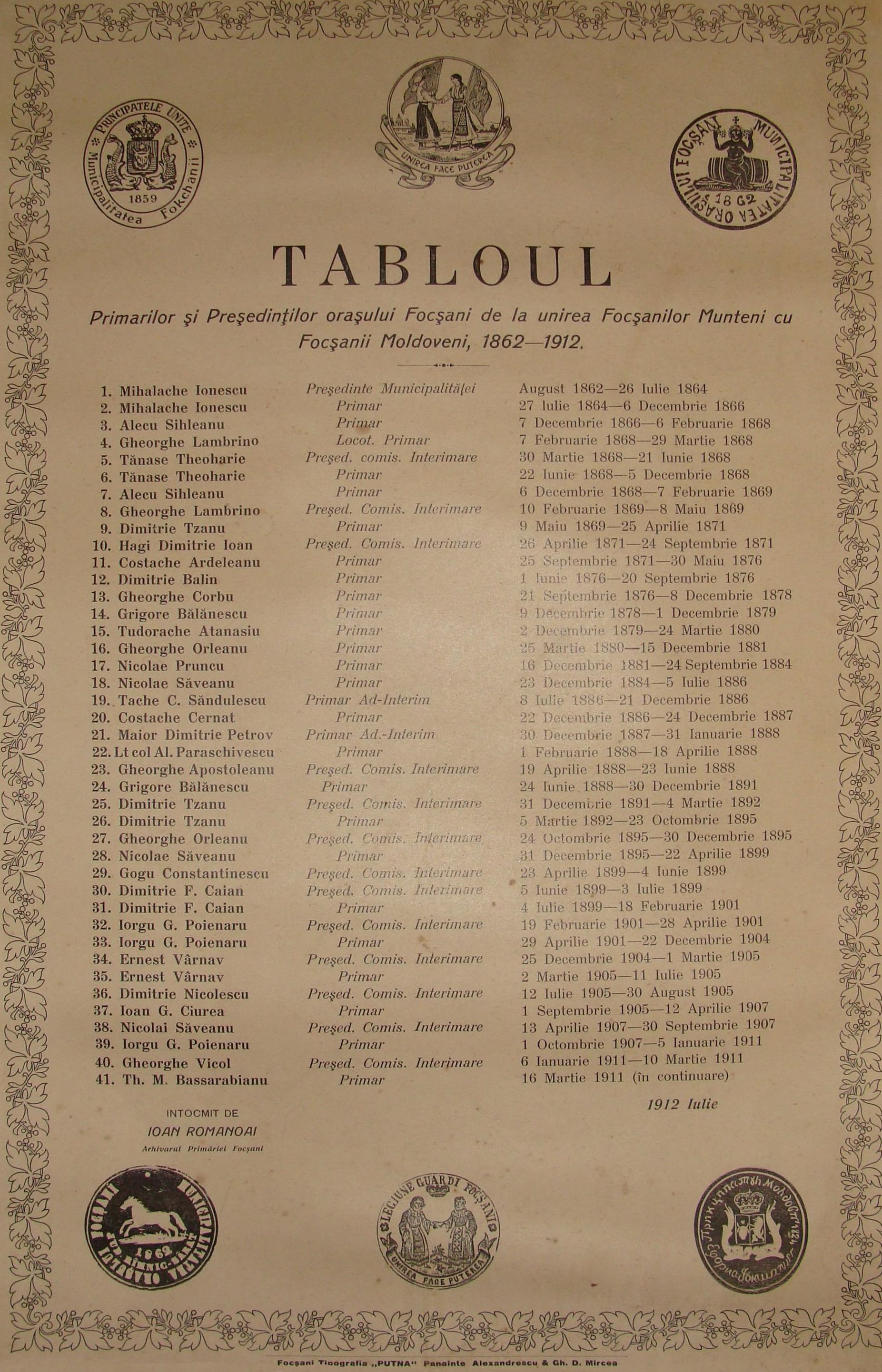
History of Mayors of Focșani Municipality
| Period | Position | Name and Surname |
|---|---|---|
| 2024‑present | Mayor | Misăilă Cristi Valentin |
| 2020‑2024 | Mayor | Misăilă Cristi Valentin |
| 2016‑2020 | Mayor | Misăilă Cristi Valentin |
| 2012‑2016 | Mayor | Bacinschi Decebal Gabriel |
| 2008‑2012 | Mayor | Bacinschi Decebal Gabriel |
| 2004‑2008 | Mayor | Bacinschi Decebal Gabriel |
| 2000‑2004 | Mayor | Bacinschi Decebal Gabriel |
| 1996‑2000 | Mayor | Lăţcan Nicolae |
| 1992‑1996 | Mayor | Lăţcan Nicolae |
| 1991‑1992 | Mayor | Momanu Corneliu |
| 1990‑1991 | Mayor | Pantazică Toadel |
| 1990 | Mayor | Filipache Sîrbu |
| 1990 | Mayor | Tutoveanu Emil |
| 1989‑1990 | Mayor | Gheorghe Băeșu |
| 1984‑1989 | Mayor | Grigore Dima |
| 1983‑1984 | Mayor | Stoica Costică |
| 1980‑1982 | Mayor | Alexandrina Mocanu |
| 1975‑1979 | Mayor | Băluță Ion Bogdan |
| 1973‑1975 | Mayor | Anastasiu Ion |
| 1970‑1972 | Mayor | Moldovan Zenovie |
| 1969 | Mayor | Anastasiu Ion |
| 1965‑1969 | Mayor | Bîrlădeanu Vasile |
| 1962‑1965 | Mayor | Chifan Nicolae |
| 1954‑1961 | Mayor | Rădneanu Anton |
| 1954 | Mayor | Ghenoiu Leonida |
| 1954 | Mayor | Atanasiu Ștefan |
| 1953 | Mayor | Nițeanu Gheorghe |
| 1951‑1952 | Mayor | Stoica Ion |
| 1937 | President | Col. A. Păltineanu |
| 1936‑1937 | President | Al. N. Leon |
| 1935‑1936 | President | Major I. Tomescu |
| 1935 | President | Radu Săveanu |
| 1934‑1935 | President | Al. N. Leon |
| 1933‑1934 | President | N. Stănescu Putna |
| 1932‑1933 | President | N. Al. Constantinescu |
| 1931‑1932 | President | Ştefan P. Dimitriu |
| 1931 | Mayor | N. Al. Constantinescu |
| 1929‑1931 | Mayor | Al. C. Alevra |
| 1927‑1929 | Mayor | V. C. Antonescu |
| 1926‑1927 | Mayor | N. Al. Constantinescu |
| 1922‑1926 | President | Iorgu G. Poienaru |
| 1920‑1922 | President | Savel Rahtivan |
| 1920 | President | Col. I. Negulescu |
| 1920 | President | Al. Ionescu Ioan |
| 1919‑1920 | President | Iorgu G. Poienaru |
| 1918‑1919 | President | Săvel Rahtivan |
| 1917‑1918 | Mayor | Al. Delladecima |
| 1914‑1917 | Mayor | Ştefan Graur |
| 1914 | President | Nicolae Săveanu |
| 1911‑1914 | Mayor | Th. M. Bassarabianu |
| 1911 | President | Gheorghe Vicol |
| 1907‑1911 | Mayor | Iorgu G. Poienaru |
| 1907 | President | Nicolaie Săveanu |
| 1905‑1907 | Mayor | Ioan G. Ciurea |
| 1905 | President | Dimitrie Nicolescu |
| 1905 | Mayor | Ernest Vârnav |
| 1904‑1905 | President | Ernest Vârnav |
| 1901‑1904 | Mayor | Iorgu G. Poienaru |
| 1901 | President | Iorgu G. Poienaru |
| 1899‑1901 | Mayor | Dimitrie F. Caian |
| 1899 | President | Dimitrie F. Caian |
| 1899 | President | Gogu Constantinescu |
| 1895‑1899 | Mayor | Nicolae Săveanu |
| 1895 | President | Gheorghe Orleanu |
| 1892‑1895 | Mayor | Dimitrie Tzanu |
| 1895 | President | Dimitrie Tzanu |
| 1888‑1891 | Mayor | Grigore Bălănescu |
| 1888 | President | Gheorghe Apostoleanu |
| 1888 | Mayor | Lt. Col. Al. Paraschivescu |
| 1887‑1888 | Mayor | Major Dimitrie Petrov |
| 1886‑1887 | Mayor | Costache Cernat |
| 1886 | Mayor | Tache C. Săndulescu |
| 1884‑1886 | Mayor | Nicolae Săveanu |
| 1881‑1884 | Mayor | Nicolaie Pruncu |
| 1880‑1881 | Mayor | Gheorghe Orleanu |
| 1879‑1880 | Mayor | Tudorache Atanasiu |
| 1878‑1879 | Mayor | Grigore Bălănescu |
| 1876‑1878 | Mayor | Gheorghe Corbu |
| 1876 | Mayor | Dimitrie Balin |
| 1871‑1876 | Mayor | Costache Ardeleanu |
| 1871 | President | Hagi Dimitrie Ioan |
| 1869‑1871 | Mayor | Dimitrie Tzanu |
| 1869 | President | Gheorghe Lambrino |
| 1868‑1869 | Mayor | Alecu Sihleanu |
| 1868 | Mayor | Tănase Theoharie |
| 1868 | President | Tănase Theoharie |
| 1868 | Mayor | Gheorghe Lambrino |
| 1866‑1868 | Mayor | Alecu Sihleanu |
| 1864‑1866 | Mayor | Mihalache Ionescu |
The title of “Honorary Citizen” of Focșani Municipality represents the highest distinction that can be awarded to a person by the Local Council.
This title is granted to prominent figures in public, cultural, artistic, scientific, economic, and sports life who have made a significant contribution to the development of the city or who have gained notable recognition nationally or internationally, as well as to those who, through their sacrifice, have saved the lives and property of fellow citizens.
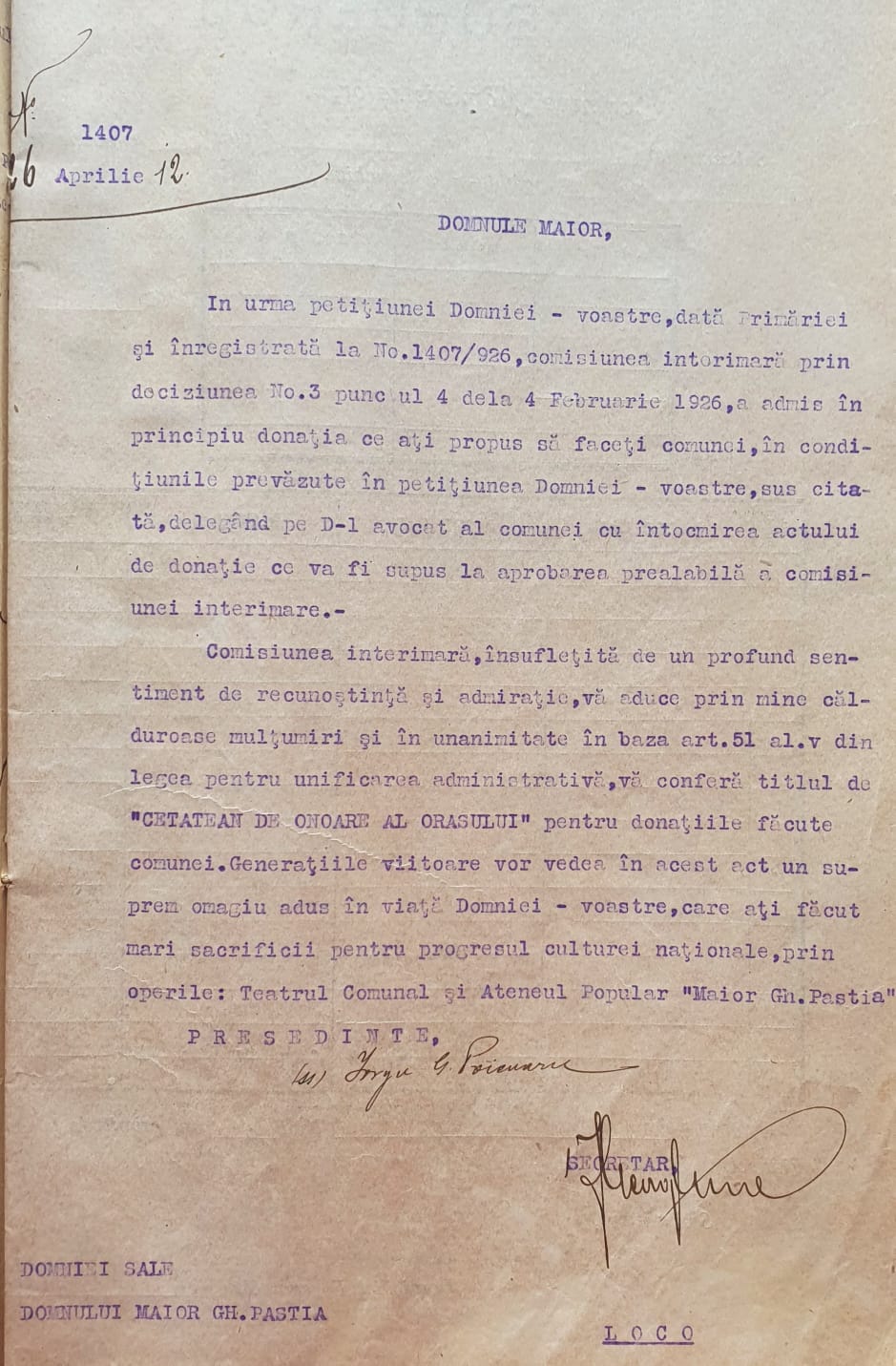
MAJOR GHEORGHE PASTIA
born 1848 – died 1929
Major Gheorghe Pastia (1848–1929) was a philanthropist from Focșani who left posterity two cultural landmarks, the “Major Gheorghe Pastia” Municipal Theater and the “Major Gheorghe Pastia” Popular Athenaeum. For his contributions to the progress of national culture, the municipality awarded him the title of “Honorary Citizen of Focșani” on April 12, 1926, “with a profound feeling of gratitude and admiration,” as the authorities wished to publicly honor Major Pastia, who donated his entire fortune for the financing of the Theater and Athenaeum, buildings he often referred to as “my children.” Even today, the “children” of Major Pastia continue to give personality to Focșani and immortality to the philanthropist, providing the citizens the opportunity to enjoy CULTURE elevated to the rank of ART.
TEODOR MIHAI
born March 1, 1958
Teodor Mihai was awarded the title of “Honorary Citizen of Focșani Municipality” by Local Council Decision no. 261 of September 29, 2022, following the international recognition of a mathematical formula he discovered, registered in The On-Line Encyclopedia of Integer Sequences (OEIS). He has been the head of the Mathematics Department at the prestigious “Al. Ioan Cuza” National College since 1985, contributing annually to the improvement of mathematics education in Focșani.
ILIE ROȘU
born March 20, 1960 – died January 24, 2024
Colonel (ret.) Ilie Roșu was posthumously awarded the title of “Honorary Citizen” by Local Council Decision no. 1 of January 31, 2024, as a renowned marathoner who organized the Focșani Unirii Marathon for eight editions, whose notable performances and commitment in national and international marathons made him a model and example for many runners.

BORȘ – DUMITRESCU LUCIAN – LARIS
born August 10, 1999
Borș–Dumitrescu Lucian–Laris was awarded the title by Local Council Decision no. 68/2025 as a judoka whose outstanding achievements as a National, Balkan, and European Champion brought recognition to Focșani at national and international levels.
CORNELIU ION
born June 27, 1951
Corneliu Ion was awarded the title by Local Council Decision no. 225 of September 17, 2020, as an eminent shooting coach with national and international recognition, contributing to Focșani’s positive image.
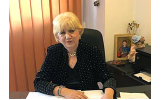
AURELIA COSMA
born November 22, 1950
Aurelia Cosma was awarded the title by Local Council Decision no. 3 of January 28, 2021, as a doctor in ethnography and cultural anthropology, researcher at the Dimitrie Gusti National Village Museum, who promoted Vrancea County nationally through organized events, competitions, and cultural activities in ethnology and anthropology.
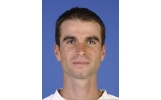
ADRIAN VOINEA
born August 6, 1974
Adrian Voinea was awarded the title by Local Council Decision no. 575 of December 18, 2019, as a tennis player of national and international recognition, contributing to the development and prestige of Focșani nationally and internationally.
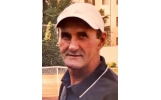
GEORGEL BUCUROIU
born December 25, 1949 – died 2008
Georgel Bucuroiu was posthumously awarded the title by Local Council Decision no. 574 of December 18, 2019, as a professional tennis coach of national and international recognition, enhancing Focșani’s image.
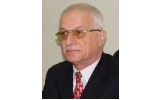
HORIA DUMITRESCU
born August 24, 1949
Horia Dumitrescu was awarded the title by Local Council Decision no. 1 of January 14, 2019, as a history professor and museologist, contributing to the understanding of Focșani’s local history.
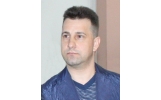
BERDEI EMANUEL CORNEL
born August 30, 1980
Berdei Emanuel Cornel was awarded the title by Local Council Decision no. 141 of March 28, 2019, as a corporal 3rd class, for his exemplary activity in military operations in Iraq and Afghanistan, contributing to Focșani’s image nationally and internationally.
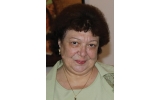
ELENA STOICIU
born May 12, 1947
Elena Stoiciu was awarded the title by Local Council Decision no. 416 of October 31, 2018, as an art teacher and visual artist, contributing to the positive image of Focșani nationally and internationally.

CĂTĂLIN PARASCHIVEANU
born April 9, 1991
Cătălin Paraschiveanu was awarded the title by Local Council Decision no. 268 of July 3, 2018, as a professional boxer recognized nationally and internationally, enhancing Focșani’s image.
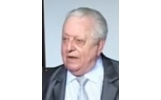
CONSTANTIN BALACI
born May 23, 1935 – died May 1, 2021
Constantin Balaci was awarded the title by Local Council Decision no. 266 of July 3, 2018, as a filmmaker, screenwriter, director, and publicist from Vrancea with national recognition.
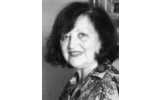
VIORICA DIDINA TOPORAȘ
born February 4, 1941 – died March 13, 2022
Viorica Didina Toporaș was awarded the title by Local Council Decision no. 267 of July 3, 2018, as a painter who contributed to Focșani’s positive image nationally and internationally.
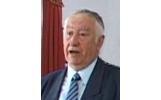
PETRU ABEABOERU
born July 13, 1948
Petru Abeaboeru was awarded the title by Local Council Decision no. 265 of July 3, 2018, as a history professor with national recognition, contributing to the understanding of Focșani’s local history.
GINA GOGEAN
Gina Gogean was awarded the title by Local Council Decision no. 41 of June 25, 1993, as a gymnast, double world vice-champion (all-around and floor) at the 1993 Gymnastics World Championships, enhancing Focșani’s image nationally and internationally.
The Communal Palace, the first administrative headquarters built in the Municipality of Focșani
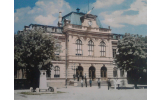
The history of the first administrative headquarters built in Focșani began at the end of the 19th century, when local authorities borrowed funds to build a communal ospital (ospel) as well as four primary schools. After a hundred years, affected by earthquakes during the past century, the building was demolished and reconstructed at the end of the 1980s on the same site, respecting its original form. This is a history that the city is proud of and strives to protect through investment projects carried out by the Municipality of Focșani.
The Focșani City Hall building is the first administrative headquarters constructed in the Municipality of Focșani after the administrative unification in 1862 of Focșanii Munteni with Focșanii Moldovei. According to the National Archives, initially called “Ospel comunal” (from the Italian ostello – house or residence of an authority), the building was constructed by the Romanian Society of Construction and Public Works in 1885-1886. Funding for the investment came from a loan obtained from the Savings and Consignment Bank (CEC), and the procedures to select a builder began in 1884 during the term of Mayor Neculai Pruncu. Announcements regarding the tender were published in local and national newspapers, including in French, and sent to town halls across Romania.
The selection of the builder took longer than expected. Initially, no contractors registered for the tender, and subsequently a contestation reached the Ministry of the Interior.
Finally, on October 3/15, 1884, the contract was signed between the City Hall and the Romanian Society of Construction and Public Works. The document specified the construction of a communal ospel and four primary school buildings. The investment value after the tender was 339,150 lei for all five buildings.
Construction of the palace began in 1885 and was completed in 1886, when the building was officially received by the new mayor Tache Săndulescu and two municipal councilors. In 1886, annexes called “athenansele” were also built, initially intended for the collector of Putna County and the staff. That same year, the Municipal Council approved the construction of a pavilion next to the new Communal Palace.
The Focșani Communal Palace served as the administrative headquarters of the municipality, hosting key city services. A 1939 report shows the organization of the building at that time. On the ground floor were the cashier, archives, a room for the County and Municipal Officials’ Association. Also on the ground floor were rooms housing the Focșani Communal Enterprises, the Verification and Control Service, and the Local Tax Office. On the first floor were a reception hall, the offices of the mayor and secretary, as well as several services, including Civil Status, Legal and Statistical Services, Registry and Archives, and Accounting. One room was dedicated to the institution’s telephone. In the annexes were the Technical Service, the Veterinary Service, and staff quarters. In total, the Communal Palace had 25 rooms, three corridors, two toilets, and a staircase. The built area was 684 square meters, with an inventory value of 4,788,000 lei.
Unfortunately, the Communal Palace was affected by earthquakes during the 20th century. In 1940, the November 10 earthquake completely destroyed the upper floor of the building. “The Focșani City Hall building is so deteriorated that it must be rebuilt,” stated a report sent to the Minister of Internal Affairs by local authorities, which mentioned that after the earthquake only 25% of the city’s buildings remained standing.
The 1977 earthquake again damaged the City Hall building. Communist authorities stated that the building required consolidation through a project developed with assistance from the Structural Engineering Department of the Bucharest Institute of Constructions. The 1986 earthquake destroyed everything that had been repaired. At that time, the decision was made to demolish and reconstruct the building in its current form. The initial decision of the communist authorities was for the building to serve as the headquarters of the Vrancea Communist Youth Union. However, in 1990, earthquakes in May damaged the former Prefecture building, where City Hall services were operating. Under these circumstances, City Hall activities returned to the reconstructed building in Piața Unirii.
In 2023, a new chapter began in the history of the building. The Municipality of Focșani launched a project to rehabilitate the local administration building. The project, “Increasing the Energy Performance of the Focșani City Hall Building,” is funded through the National Recovery and Resilience Plan and includes complex energy renovation works, both interior and exterior, roof replacement, sidewalk repairs, and modernization of the lighting system. The total investment exceeds ten million lei, including VAT.
Being located on the Bucharest – Ploiești – Bacău – Suceava railway line and on the Bucharest – Buzău – Suceava road via E85 (DN2), flanked by the Putna River to the east at a distance of 7 km and the Milcov River to the south at a distance of 2 km, the city of Focșani lies in the low plain of the Lower Siret at an altitude of 50–55 m above sea level, a plain stretching from the Mărășești line, Vânători, Tătăranu, Ciorăști to the Siret River bed.
Natural Risks
The territory of Vrancea County corresponds to the most active seismic zone in Romania. The distribution of earthquake epicenters highlights the existence of two zones:
- the Vrâncioaia-Tulnici-Soveja trunk, where earthquakes occur at depths between 80–160 km, related to the curvature of the Carpathian arc;
- the plain region between Râmnicul Sărat, Mărășești, and Tecuci with shallower earthquakes.
Seismic events with epicenters in Vrancea are tectonic in origin, caused by movements of the crustal blocks or other upper layers of the Earth along pre-existing or very deep faults.
Devastating earthquakes with magnitudes between 7 and 8 on the Richter scale were recorded on October 8, 1620; August 9, 1679; June 12, 1701; May 13, 1738; April 6, 1790; October 26, 1802, 1829; and January 28, 1838.
In the 20th century, the most significant events occurred on May 25, 1925; November 10, 1940, which almost completely destroyed the city of Panciu with a magnitude of 7.4; March 4, 1977 with a magnitude of 7.2; August 30, 1986 with a magnitude of 7; and May 30–31, 1990 with magnitudes of 6.9 and 6.4, respectively.
The number of earthquakes with a magnitude equal to or greater than 3 recorded in Vrancea County over the past three years is as follows:
- In 1998, 19 earthquakes were recorded, the largest occurring on April 28 with a magnitude of 5;
- In 1999, 33 earthquakes were recorded, the strongest occurring on April 28 with a magnitude of 5.3, and on November 8 and 14 with a magnitude of 4.6;
- In 2000, 23 earthquakes were recorded, the largest occurring on April 6 with a magnitude of 5.
Risk factor analysis for the municipality of Focșani must primarily take into account that the most important seismic zone in Romania is located in the Vrancea region.
Climate of the Municipality of Focșani
In the territory of the Municipality of Focșani, the climate is temperate continental, influenced by the shelter of the Curvature Carpathians, with large temperature variations.
The average temperature is approximately 9 °C (48.2 °F):
- Absolute maximum recorded: +42.3 °C (108.1 °F, July 1990)
- Absolute minimum: -33.7 °C (-28.7 °F, February 1987)
The annual precipitation exceeds 400 mm (15.7 in), with the rainiest months being May–June, and the driest months December–February.
The number of snowy days is around 20 per year.
The dominant winds in all seasons blow from the northeast, while warmer and rarer winds come from the south and southeast.
CITY HISTORY


Apasă pe un element din meniu pentru a vedea informațiile.